
When someone comes in with limited joint mobility, they usually assume the issue sits inside the joint itself. Sometimes that's true. More often, though, the real restriction lives in the soft tissue surrounding it, the muscles, fascia, and connective fibers that are meant to move freely but have tightened, stuck together, or grown overactive over time. This is where trigger point massage and professional massage tend to make a real difference, since working through that tissue can restore range of motion without ever touching the joint directly.
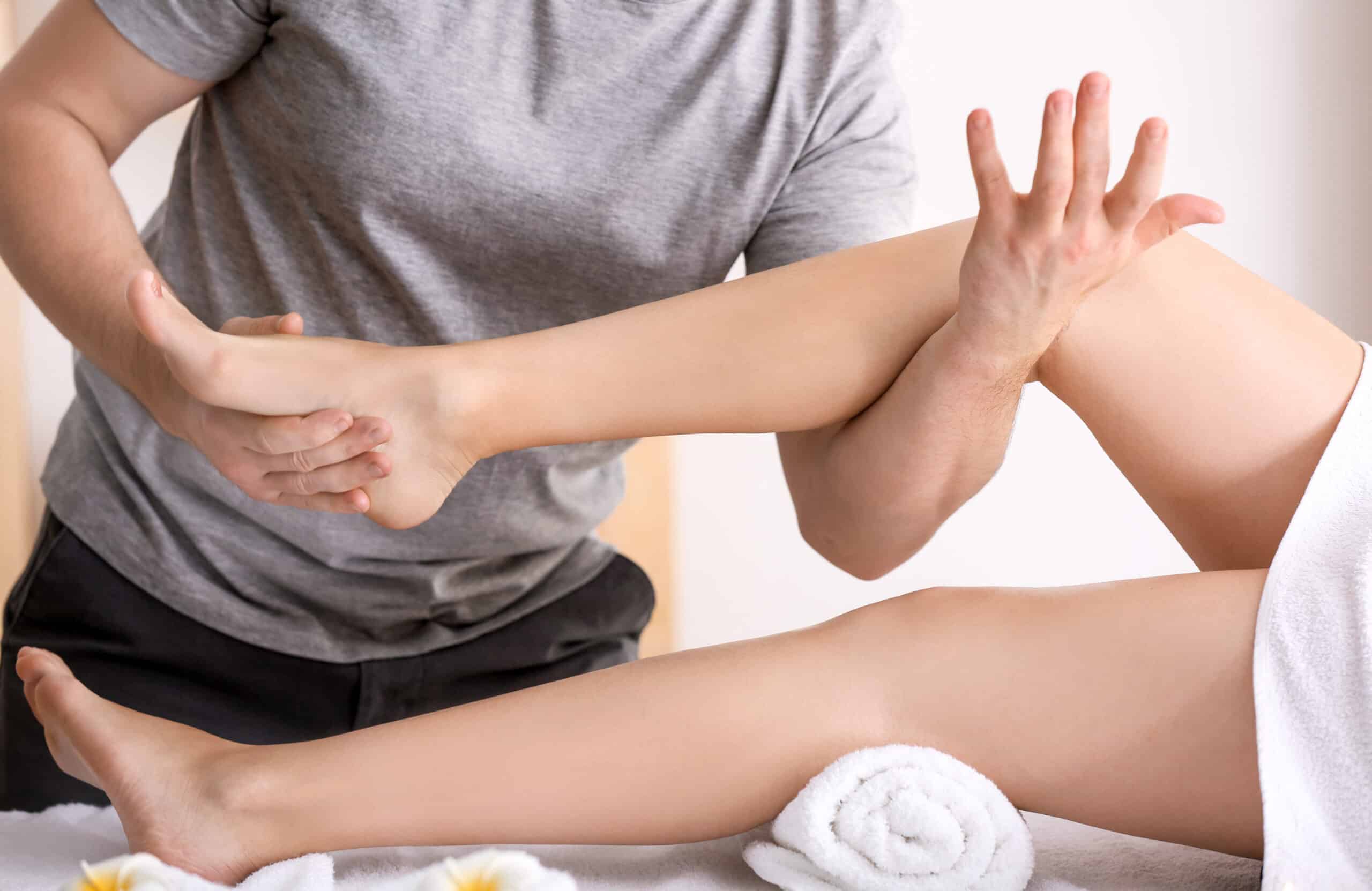
Mobility restriction has a few common sources that tend to follow recognizable patterns. Muscles held in a shortened position for extended periods adapt to that position. The hip flexors of someone who sits eight hours a day are a straightforward example. Fascia that has been under chronic stress stiffens and loses the elasticity that allows tissue planes to slide against each other the way they should.
Post-injury scar tissue is another source. The body lays down collagen in response to injury, and that collagen doesn't always organize in alignment with existing tissue fibers. The result is a denser, less pliable area that limits movement and creates dysfunction in surrounding muscle groups compensating around it. Repetitive loading patterns in athletes and simple disuse in less active clients produce their own versions of this same pattern.
Deep tissue massage is the starting point for most mobility-focused sessions. Slow, sustained pressure applied to a hypertonic muscle allows the tissue to respond and release in a way that faster or more superficial work doesn't achieve. When a muscle that has been shortened for months finally releases, the range of motion it was limiting often returns along with it.
Connective tissue work focuses on the fascia specifically. Slow, prolonged pressure on fascial layers allows them to soften over time, a property of connective tissue that responds to sustained mechanical input rather than quick force. That's why deep tissue work that appears to barely move is often producing more change in the underlying restriction than faster work at a similar depth. Patience in the technique is part of what makes it effective.
When restrictions sit in specific lines of fascia or in scar tissue that doesn't respond to hand pressure alone, gua sha and IASTM become the appropriate tools. These instruments allow targeted pressure across specific tissue lines with a precision that's difficult to achieve with hands.
IASTM in particular is used to address scar tissue, fascial adhesion, and chronic tendinopathy that haven't responded to other approaches. The controlled mechanical input it delivers stimulates a healing response in tissue that has become chronically non-responsive, essentially reactivating a repair process that stalled. For shoulder restrictions, hip capsule tightness, and the fascial limitations that reduce ankle or thoracic mobility, gua sha and IASTM give us access to tissue that other techniques can't fully reach.
Most manual massage techniques work through compression, applying pressure toward the tissue. Cupping works in the opposite direction. Suction lifts the tissue upward, creating separation between tissue layers that have adhered together. For areas of dense fascial restriction, this decompressive force reaches the adherence from a different angle than compression can, and it often produces a distinctly different quality of release.
Clients who've had cupping alongside deep tissue work on a restricted area frequently notice that the mobility afterward feels more durable than with compression alone. We include cupping as a free add-on for our members during every massage session, which means clients working on specific mobility goals can access it consistently without treating it as a separate expense.
Warm bamboo uses heated bamboo tools to apply deep, consistent pressure through longer strokes. The heat relaxes the superficial tissue layer, which allows work into deeper layers without the defensive response that can occur with cold or ambient-temperature tools. For clients with particularly dense tissue or areas of significant restriction, warm bamboo provides access that hand pressure alone sometimes can't achieve.
Float therapy doesn't directly address tissue restriction the way manual work does, but it plays a useful supporting role. Removing gravitational compression from every joint during a float session, particularly in the spine and hips, gives tissue that's been under continuous mechanical load a period of genuine rest. Many of our clients find that mobility work integrates more durably after a float session, and that they return the following week with less of the restriction having crept back.
Our $10 per month membership covers both massage and float sessions with no contract and no cancellation penalty. A 60-minute float runs $40 for members.
Mobility restrictions that developed over years don't resolve in a single session. The tissue needs time and repeated input to reorganize and hold the change. A session plan built around specific mobility goals typically runs four to eight sessions in an initial phase, followed by monthly maintenance to preserve the gains.
Talk with your therapist about what you want to address and what your timeline looks like. We build from there.
Related Topics: