Anyone who spends long hours on their feet knows that tension in the feet is rarely just a foot problem. Tightness in the plantar fascia, chronic heel pain, swelling, and restricted ankle mobility all travel up the kinetic chain and show up as knee, hip, and lower back issues over time. Working with a highly rated massage spa in American Fork can help target the feet directly, treating the foundation that everything above depends on.
Reflexology is a targeted technique applied to the feet and sometimes the hands, based on the principle that specific zones in these areas correspond to organs and systems throughout the body. At Body Balance Massage and Float, we offer reflexology as a standalone technique or as part of a longer session.
What Is Reflexology?
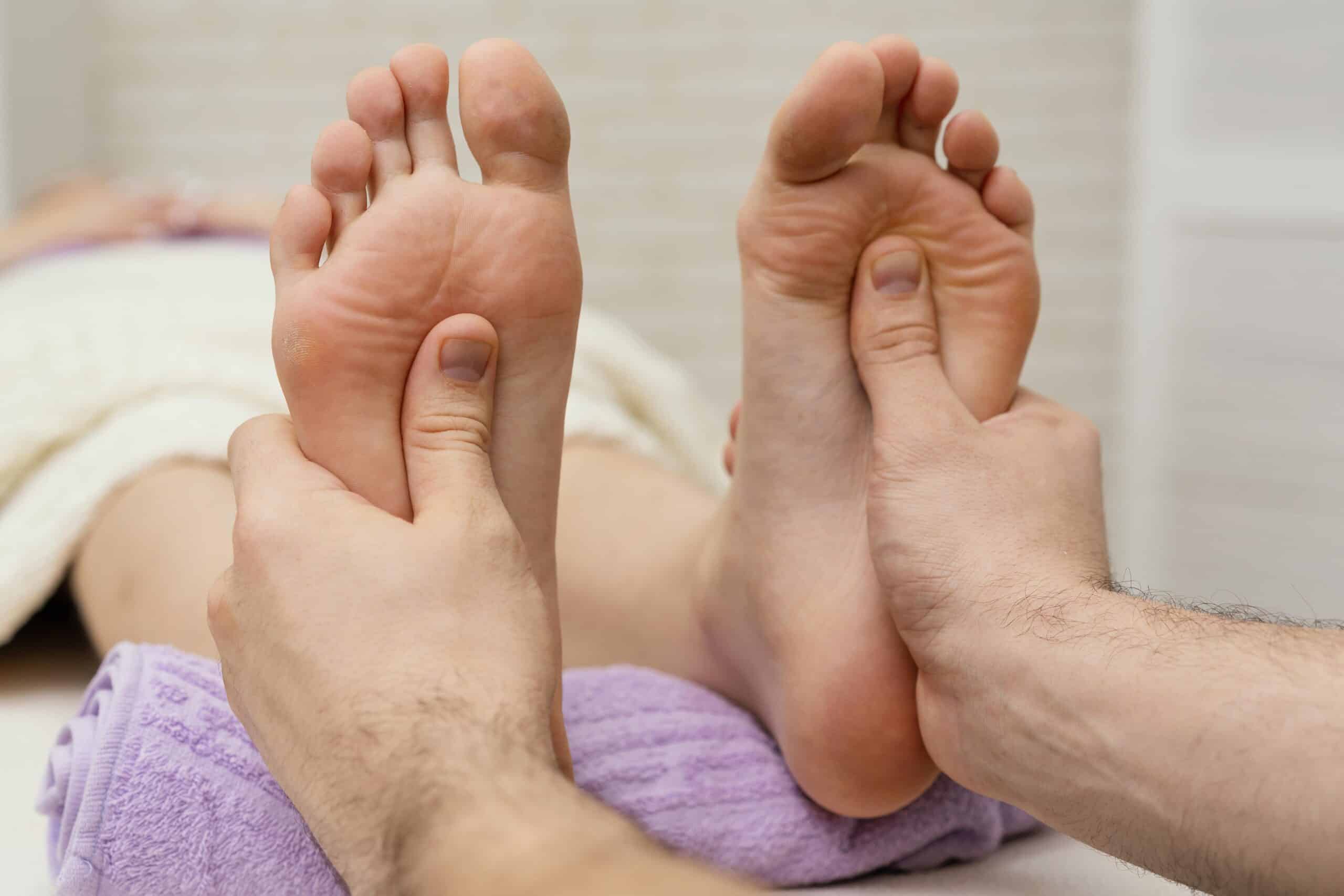
Reflexology is the application of specific pressure to mapped zones in the feet using thumb, finger, and hand techniques. The underlying framework holds that the foot contains reflex points corresponding to every major organ, gland, and body system. Working these points produces effects both locally in the foot and systemically throughout the body.
It is not the same as a standard foot massage. A foot massage addresses soft tissue directly. Reflexology applies precise pressure to specific mapped locations to produce a response in the corresponding area of the body. The technique requires training in the reflex map and in the application of pressure that produces the intended effect.
The Physical Benefits for the Feet
At the local level, reflexology produces real physical changes in foot tissue. Pressure on the plantar fascia and the muscles of the foot improves blood flow to tissue that tends to be chronically compressed and under-served by standard circulatory activity.
For clients with plantar fasciitis, the targeted work on the heel and arch can reduce tension in the fascia and ease the morning pain that is a hallmark of the condition. For clients on their feet all day, reflexology clears the accumulated tension and fluid that build up in foot tissue over a work shift. The American Massage Therapy Association notes reflexology as an established complementary approach for foot tension, circulation support, and stress reduction.
Systemic Effects Beyond the Foot
The systemic effects of reflexology are well documented in clinical literature. Research has shown effects including reduction in reported anxiety levels, improvements in sleep quality, and positive changes in heart rate variability following sessions.
These effects are consistent with what happens when the nervous system is calmed through targeted touch applied to a highly innervated area. The foot contains approximately 7,000 nerve endings. Stimulating these in a specific sequence produces a measurable response in the autonomic nervous system. The National Center for Complementary and Integrative Health categorizes reflexology within the broader group of manual therapies with documented benefits for pain, anxiety, and stress.
Who Reflexology Works Best For
Reflexology is a strong choice for clients who spend extended hours standing or walking and carry chronic foot tension, clients with plantar fasciitis or heel pain that has not fully responded to other treatment, clients with lower back pain that worsens from poor foot mechanics, and clients with circulation concerns in the lower extremities.
Pregnant clients in the second and third trimesters frequently choose reflexology as a safe option when deeper pressure work in certain areas is not appropriate. Let us know you are expecting when booking so we can adapt the session accordingly.
Reflexology is not a substitute for medical care in cases of acute injury, active infection, or blood clots in the lower legs. Clients with these conditions should get medical clearance before booking.
Combining Reflexology With Other Modalities
Reflexology is most often incorporated into a standard massage session rather than booked alone. A common pairing is Swedish or deep tissue massage for the back and upper body, with reflexology worked into the lower portion of the session.
For athletes and active clients, reflexology alongside sports massage helps address the kinetic chain from the ground up. Clients interested in extending their recovery may also benefit from a float therapy session after reflexology. The zero-gravity environment continues the nervous system recovery that reflexology begins.
What to Expect During a Session
You remain clothed from the waist up and remove your shoes and socks. The therapist applies specific pressure to mapped zones across the bottom, sides, and top of the foot, working through each reflex area in sequence. Some areas will be more tender than others. This is common and is part of what the technique addresses.
The session is more specific and precise than a general foot massage. Some clients feel a strong sense of fatigue during or after the session as the nervous system shifts into recovery mode. This is normal and typically passes within an hour.
Pricing
Reflexology is priced within our standard session rates. A 50-minute session is $120 standard or $72 for members. Our $10 monthly membership has no contract and covers both massage and float therapy. First-time clients receive 35% off their first session.
Related Topics:
Most posture problems aren't actually structural. Your spine isn't permanently knocked out of alignment. What's really stuck is the soft tissue, namely the muscles, fascia, and tendons that have settled into a chronic position and now push back whenever you try to correct it. That's exactly why a premium massage treatment in American Fork can make such a noticeable difference for people dealing with poor posture. Years of sitting at a desk shorten the hip flexors. Hours of looking down at a screen load up the neck extensors and tighten the front of the chest. Long stretches behind the wheel stiffen the thoracic spine and pull the shoulders forward into a rounded position.
These patterns settle into the tissue, and the tissue holds them. Massage alone does not fix posture, but specific techniques address the shortened, overactive muscles that pull the body out of alignment. Removing that pull is a necessary step before corrective exercise can work effectively.
How Soft Tissue Patterns Create Postural Problems
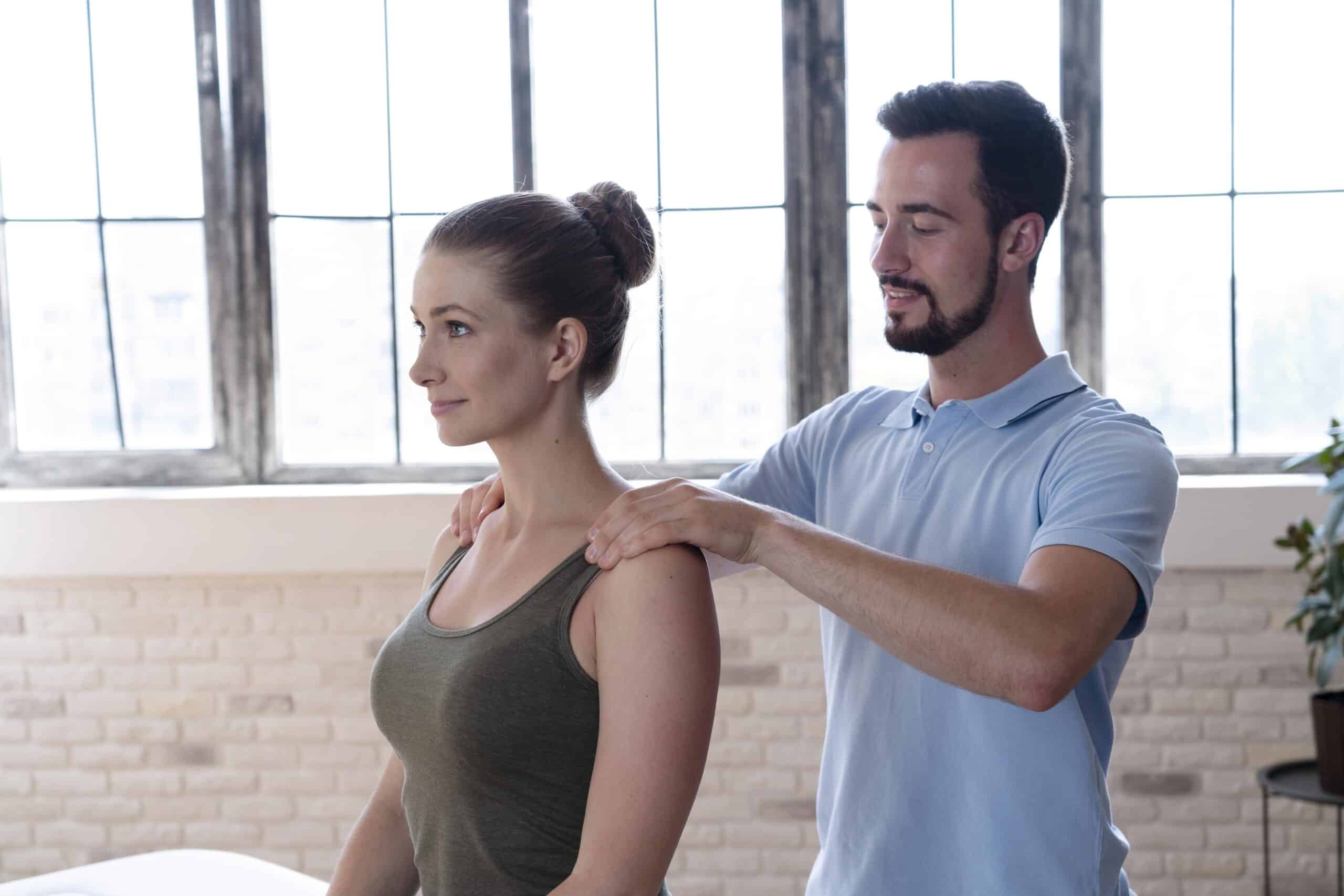
Posture is maintained by the balance of tension between opposing muscle groups. When one group becomes chronically shortened, its opposing group becomes chronically lengthened and functionally weak. This imbalance creates the visible patterns most people recognize in themselves: forward head, rounded shoulders, anterior pelvic tilt, hyperextended knees.
The shortened, tight muscles are the primary targets for massage. Deep tissue massage, trigger point therapy, and myofascial release work through these shortened patterns by applying sustained pressure to release the holding tension. Once the shortened muscles release, the opposing muscles can begin to function more normally, which is what makes subsequent corrective exercises more effective.
Deep Tissue Massage for Postural Muscles
Deep tissue massage applies slow, sustained pressure through the superficial layers of muscle to reach the deeper tissue where chronic tension lives. For postural work, the primary targets depend on the pattern being addressed.
For clients with forward head posture, the focus goes to the posterior cervical muscles: the upper trapezius, levator scapulae, and splenius capitis. For clients with rounded shoulders, the pectoralis major and minor are the priority. For clients with anterior pelvic tilt, the hip flexors and iliopsoas are the key structures. The work is deliberate, not forceful. Pressure is held at specific depths until the tissue begins to release.
Trigger Point Therapy and Referred Pain
Many postural problems come with referred pain, where pain appears in one location but originates elsewhere. Neck pain from forward head posture often refers from trigger points in the upper trapezius. Lower back pain from anterior pelvic tilt often refers from trigger points in the iliopsoas.
Trigger point therapy applies direct, sustained pressure to the specific tight spot in a muscle until it releases. The release is often accompanied by an immediate reduction in the referred pain. For clients whose postural problems come with headaches, chronic neck pain, or shoulder and arm symptoms, trigger point work alongside deep tissue is the most direct combination we can offer.
Cupping and Gua Sha for Fascial Restriction
When postural patterns have been held for years, the fascia adapts and restricts movement independent of the muscles themselves. Cupping and gua sha address this fascial restriction in ways that standard pressure techniques cannot fully reach.
Cupping uses suction to lift soft tissue away from the underlying layer, bringing blood flow to restricted areas. It is particularly effective along the thoracic spine and the pectoral region for clients with rounded shoulders. Gua sha, also called IASTM, uses a smooth instrument to release adhesions along a muscle line. Both are $25 upgrades available to add to any session.
What to Communicate at Your Session
Getting the most out of massage for posture improvement depends on a clear intake conversation. Tell the therapist where you sit or work most of the day, what postural complaints you notice most, whether you have pain that appears somewhere different from where you feel the tension, and what exercise or stretching you already do.
The approach for a desk worker with forward head posture and tension headaches is different from the approach for a cyclist with thoracic restriction and tight hip flexors. The more specific you are, the more targeted the work can be.
Consistency Is What Makes the Difference
A single session releases tissue that has been shortened for months or years. The relief is real. The tissue will gradually return to its adapted state, however, if sessions stop and the underlying habits remain unchanged.
Monthly maintenance massage, combined with targeted stretching and strengthening, produces lasting postural change over time. Our $10 monthly membership with no contract is designed for this cadence. The member rate for a 50-minute session is $72. First-time clients receive 35% off their first session.
For clients whose postural problems are paired with systemic tension, adding a float therapy session gives the nervous system a reset between massage visits. The zero-gravity environment lets postural muscles fully disengage for the duration of the float.
Related Topics:
Recovery is where real adaptation happens. Training creates the stimulus, but recovery creates the result, which is why the best massage services in American Fork put just as much attention on what happens after a workout as on the workout itself. Recovery isn't passive either. The muscles, fascia, and connective tissue that absorbed the load during training need active support to clear metabolic waste, restore circulation, and return to their functional length.
Massage therapy is one of the most direct recovery tools available. Therapeutic soft tissue work improves circulation, reduces adhesion formation, clears metabolic byproducts from fatigued muscle, and helps the nervous system shift from a sympathetic (stress) state into a parasympathetic (recovery) state. Here is how it works across the major regions of the body.
The Head and Neck
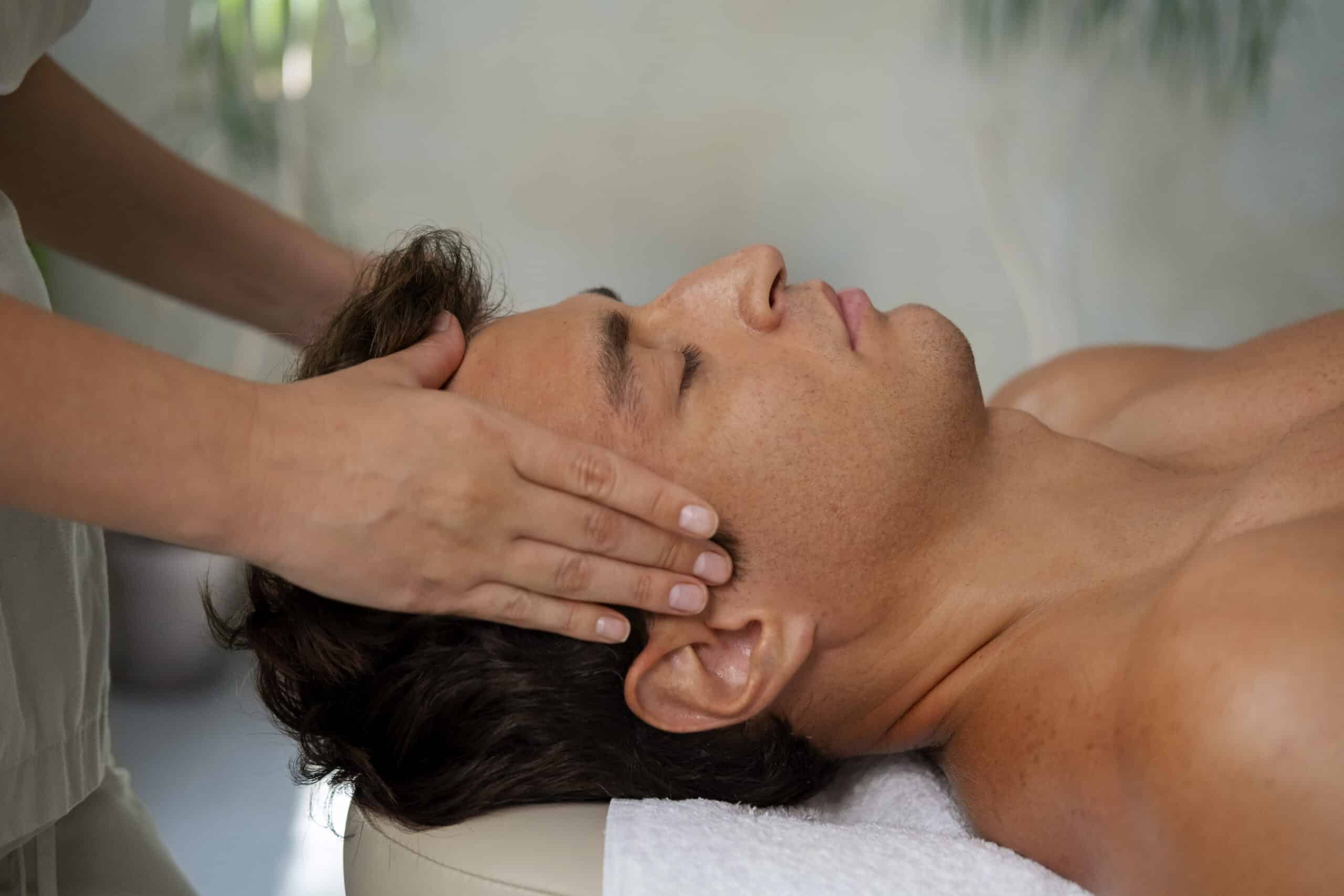
The head weighs approximately 10 to 12 pounds. Every inch it moves forward from its balanced position over the spine adds significant load to the posterior cervical muscles. Desk workers, drivers, and anyone who spends extended time looking at screens carries this load continuously.
The result is chronic tension in the upper trapezius, levator scapulae, and suboccipital muscles. These are the muscles most commonly involved in tension headaches, neck stiffness, and the shoulder tightness that many clients describe as carrying stress in the neck. Trigger point therapy on the upper trapezius and direct deep tissue work on the posterior cervicals releases this pattern more effectively than stretching alone.
The Shoulders and Upper Back
The shoulder girdle absorbs load from two directions: from the weight and position of the head and neck above, and from the arms below. The rotator cuff muscles, rhomboids, and mid-trapezius are commonly tight in both active and sedentary clients, though for different reasons.
For athletes, the posterior rotator cuff muscles accumulate restriction from repeated loading. For desk workers, the pattern comes from chronic shortening in sustained positions. Massage addresses both the superficial upper trap and the deeper rotator cuff tissue. Cupping is particularly effective on the thoracic spine and upper back for releasing the broad fascial layers that restrict scapular mobility.
The Mid-Back and Thoracic Spine
Thoracic restriction is one of the most underaddressed contributors to both upper and lower body dysfunction. When the mid-back cannot rotate or extend properly, the neck, shoulders, hips, and lower back all compensate, adding load to structures that were not designed to carry it.
Tight thoracic erectors restrict breathing, reduce upper body power output, and contribute to postural problems over time. Deep tissue work along the paraspinal muscles, combined with cupping or warm bamboo massage for broad pressure across the thoracic region, produces noticeable improvements in mobility and reduces the diffuse aching many clients describe in the mid-back.
The Lower Back and Hips
Lower back and hip pain bring more clients through our door than any other complaint. The lumbar erectors, quadratus lumborum, piriformis, and hip flexors are the primary targets in this region.
These muscles are chronically loaded in sitting, running, heavy lifting, and prolonged standing. Adhesions in the thoracolumbar fascia restrict movement and drive the cycle of tightening and pain. Targeted deep tissue work on the lumbar region, trigger point release on the piriformis and hip flexors, and gua sha along the thoracolumbar fascia gives the most direct relief for clients with chronic lower back and hip pain.
The Legs
Athletes and active clients accumulate restriction in the legs quickly. The IT band becomes a particular problem for runners and cyclists. Trigger points in the tensor fasciae latae and vastus lateralis refer pain along the IT band and into the knee.
Hamstring and calf work is critical for anyone dealing with lower back pain. Chronically shortened hamstrings pull the pelvis into posterior tilt and load the lower back. Tight calves restrict ankle dorsiflexion, which affects gait mechanics and loads the knee and hip further up the chain. Cupping and gua sha are effective in the IT band and calves for releasing fascial restriction that standard deep tissue cannot fully reach. Warm bamboo delivers broad, deep pressure across the quads and hamstrings efficiently.
The Feet
Everything above the feet is affected by what happens in the feet. Plantar fasciitis, restricted ankle mobility, and tight intrinsic foot muscles all alter gait and redistribute load upward through the entire kinetic chain.
Reflexology and targeted foot work during a session address this foundation directly. Improving circulation in the feet, releasing the plantar fascia, and working the intrinsic muscles gives the entire kinetic chain a more functional base to work from. For clients with recurring lower back or knee issues, the feet are often a missing piece in their recovery approach.
Combining Massage With Float Therapy
For full-body recovery, the most effective pairing is massage followed by float therapy. Massage handles tissue-specific work region by region. Float therapy provides systemic recovery through zero gravity, reduced sensory load, and direct magnesium absorption from the Epsom salt water.
Our open float pools are accessible to clients who would find enclosed pods uncomfortable. Sessions run 60, 90, or 120 minutes. Member rate: $40 for 60 minutes.
Pricing
Standard 50-minute massage: $120. Member rate: $72. Our $10 monthly membership has no contract. First-time clients receive 35% off their first massage.
Related Topics:
Aromatherapy massage combines hands-on soft tissue work with therapeutic-grade essential oils. The oils work in two ways: your skin absorbs them, and you breathe them in throughout the session. As one of the top-rated massage services in American Fork, Body Balance Massage and Float uses REVIVE therapeutic-grade essential oils, added to your chosen massage modality as a premium upgrade.
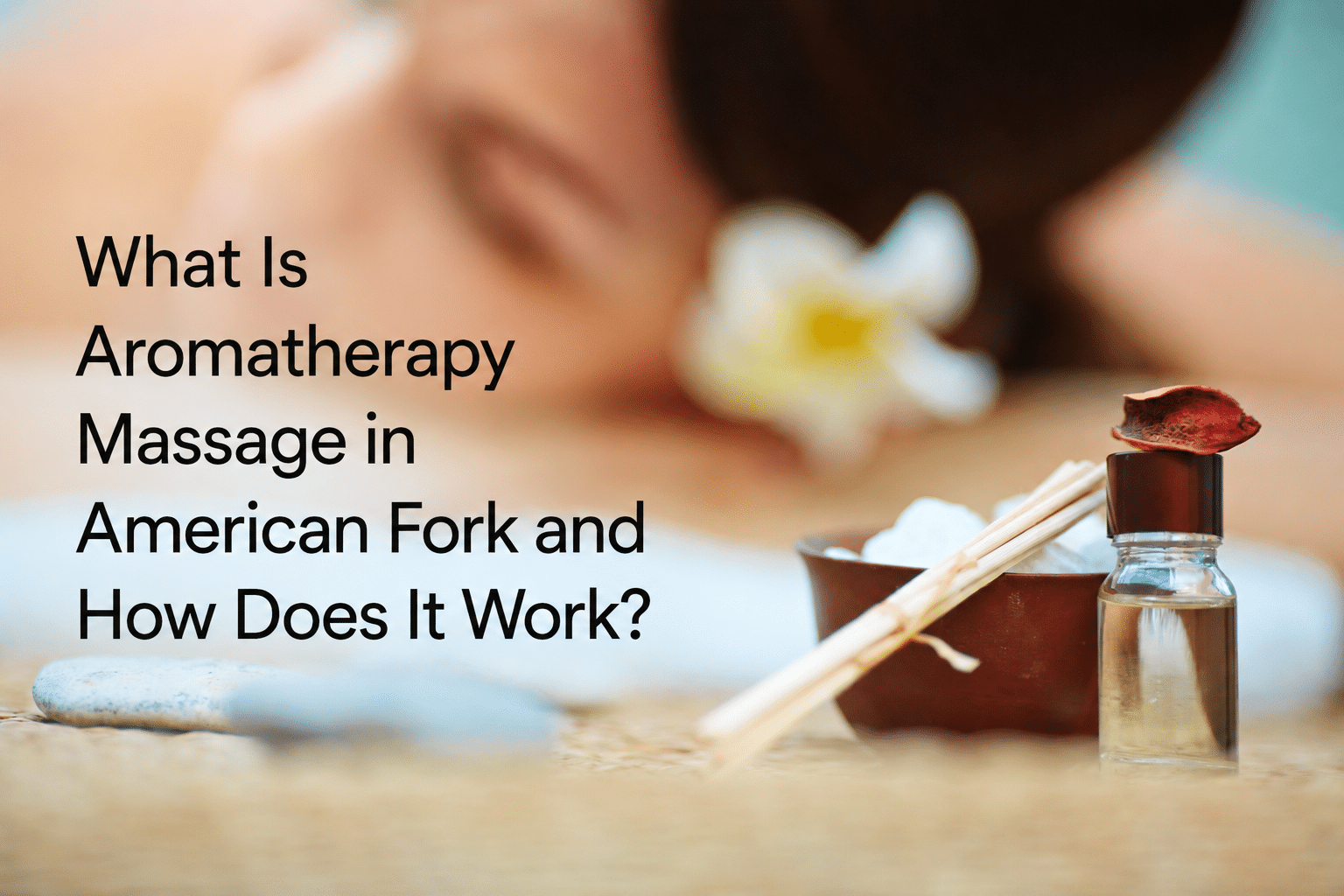
What Is Aromatherapy Massage?
Aromatherapy massage is not a standalone massage type the way deep tissue or Swedish is. It is an upgrade layered onto a base session. The therapist incorporates a therapeutic-grade essential oil blend into the massage medium and works it into the skin using the same techniques as the chosen modality.
The oils are not decorative. Therapeutic-grade essential oils contain active plant compounds that interact with the nervous system, skin, and respiratory system during the session. The combination of physical massage and scent creates a dual-input effect that a session without oils does not replicate.
How Does It Work?
Aromatherapy massage works through two distinct pathways that engage the body at the same time.
The first pathway is topical absorption. When essential oils are applied to the skin during massage, the heat and friction of the therapist's hands help the active compounds absorb through the skin barrier into the underlying tissue. The effect depends on the oil used: certain blends support circulation, reduce localized inflammation, or produce warming or cooling sensations in the muscle tissue.
The second pathway is olfactory. As you breathe during the session, aromatic compounds travel through the nasal passage to the olfactory system, which connects directly to the limbic system. The limbic system governs mood, memory, and the body's stress response. This pathway is fast. Certain scents produce measurable shifts in the autonomic nervous system within seconds of inhalation.
Both pathways working simultaneously is what gives aromatherapy massage a systemic effect that goes beyond what the hands alone can accomplish.
What Are the Benefits?
Research from the National Center for Complementary and Integrative Health identifies massage therapy as a practice with documented effects on anxiety, pain, and stress. Essential oil application adds a complementary mechanism to those same outcomes through the olfactory and topical pathways.
Clients who add aromatherapy to a session commonly report deeper muscle relaxation during the appointment, reduced residual tension in the hours after, and improved sleep quality on the night of the session. The specific benefits depend on the oil blend, the base modality, and your individual response to the treatment.
What Essential Oils Do We Use?
We use REVIVE therapeutic-grade essential oils, formulated for clinical application in massage and bodywork. The blend used in your session is selected based on your goals and any sensitivities you note during the intake conversation.
Common applications include lavender-based blends for calming and sleep support, mint or eucalyptus blends for circulation and alertness, and frankincense or citrus blends for tissue recovery. If you have known sensitivities to plant compounds or a skin condition that may react to topical oils, let us know before the session begins.
Who Is Aromatherapy Massage Right For?
This service suits clients dealing with stress, sleep difficulty, anxiety, or general muscular tension that does not require aggressive structural work. It is also a strong choice for clients who already receive regular therapeutic or Swedish massage and want to add a recovery layer without changing the base modality.
For clients who need structural work on chronic adhesions or post-injury tissue, deep tissue or trigger point therapy is more direct. Aromatherapy can still be added to those sessions as a supplemental upgrade when the goal includes nervous system calming alongside the physical work.
What Should You Expect During a Session?
Plan to arrive about 15 minutes early to complete an intake form. Let the therapist know your goals for the session, any oil sensitivities, and your preferred pressure level. The session proceeds like a standard massage, with the oil blend worked into the skin throughout.
Most aromatherapy sessions run 50 or 80 minutes. The scent will be present throughout but should not feel overwhelming. If the intensity is too much at any point, let your therapist know and they will adjust right away.
After the session, the scent may linger on your skin for a few hours. This is normal. A shower will clear it completely.
How Does It Differ from a Standard Massage?
The physical techniques are the same. What changes is the addition of the oil blend, which means the session engages the nervous system through both touch and scent at the same time. Most clients find aromatherapy sessions produce deeper relaxation during the appointment and a more pronounced carry-over into the rest of the day.
For clients who already receive regular therapeutic massage and want to extend the recovery benefit without changing the base modality, aromatherapy is one of the most direct upgrades available.
Can You Combine Aromatherapy Massage With Float Therapy?
Yes. Many clients book an aromatherapy massage followed by a float therapy session on the same visit. The massage relaxes soft tissue and engages the nervous system through scent. The float extends nervous system recovery in a gravity-free, low-sensory environment. Both services are available under our $10 monthly membership with no contract.
Frequently Asked Questions
Can aromatherapy massage help with anxiety? Many clients report reduced anxiety during and after sessions that include essential oil application. The olfactory pathway connects directly to the brain's stress-regulation system, and therapeutic-grade oils can contribute a calming effect that goes beyond what touch alone produces.
Is aromatherapy massage safe during pregnancy? Some essential oils are not recommended during pregnancy. If you are pregnant, let us know when booking so the blend can be adjusted appropriately. We offer prenatal massage with full modifications and will confirm all oil use with you before the session begins.
How much does aromatherapy massage cost? Aromatherapy is a $15 upgrade added to your base session. A 50-minute massage starts at $120 standard, or $72 for members. Our $10 monthly membership has no contract. First-time clients receive 35% off their first massage.
Do I need to bring anything special? No. The oils are provided. Wear clothing you are comfortable changing out of before the session begins.
How often should I book aromatherapy sessions? Clients managing chronic stress or sleep difficulty often find monthly sessions with aromatherapy maintain the benefit steadily. Those using massage for physical recovery may rotate aromatherapy in alongside deeper modality work depending on where they are in their recovery cycle.
Can I request a different oil if I do not like the scent? Yes. Let your therapist know during intake. If you find the scent too strong during the session, let them know immediately and they will switch to an unscented medium.
Contact Us
Ready to experience deep relaxation and healing? Reach out to Body Balance Massage and Float today.
Phone Number: (801) 855-5834
Email Address: Clinic@BodyBalanceAF.com
Physical Address: 366 S 500 E Suite B, American Fork, UT 84003
Hours:
- Monday–Saturday: 9:00 AM – 10:00 PM
- Sunday: Closed
DIRECTIONS: We are located just 30 seconds off the freeway in Suite B on the north side of the building. We have a dedicated parking lot, so feel free to park wherever you like and use the front entrance on 500 East. originate within
Related Topics:
The word "spa" gets applied to a wide range of businesses, from hotel relaxation suites to results-driven therapeutic clinics. We sit firmly in the second category, and that distinction matters if you are looking for care that actually changes how your body feels rather than how your afternoon feels. That kind of care comes from expert massage therapists who treat each session as a clinical service, not a luxury.
Body Balance Massage and Float has been serving Utah County since 2017, and what has stayed consistent is the approach: assessment-driven, outcome-focused treatment delivered by trained therapists who take the work seriously.
What We Are, and What We Are Not
We are not a day spa. There is no ambiance-first philosophy here, no standard routine applied to every client regardless of what their body needs. Our tagline is "Because Health is Happiness," and that reflects a clinical orientation: you cannot fully enjoy your life when you are burdened by pain, chronic tension, or stress that has settled into the body.
Every session at our clinic begins with a therapist assessment. The therapist evaluates what is happening in the tissue before applying any technique, identifying the source of restriction or pain and selecting the approach most likely to address it. That process is what separates a therapeutic session from a relaxation-only experience.
Our Services
We offer the full range of therapeutic massage techniques: Swedish, deep tissue, trigger point, sports, prenatal and postnatal, athletic, relaxation, hot stone, Lomi Lomi, reflexology, cranial sacral, couples, four hands, combo, and aromatherapy. Therapists blend these within a session based on what the client's body actually needs that day.
Beyond standard massage, we offer three specialty modalities that most local providers do not:
Cupping therapy uses suction to lift tissue and increase blood flow in deeper layers. Gua Sha / IASTM uses stainless steel tools to release fascial restriction and break up adhesions that have accumulated over time. Warm Bamboo massage uses heated bamboo tools for deep or relaxing pressure work. Each is available as a $25 add-on or included free for members.
Float therapy is available in our open pools, not enclosed pods. That design choice was intentional. Researcher Dr. Justin Feinstein has noted that open-air pool design removes the claustrophobia barrier entirely, making float therapy accessible to anxious populations who would not tolerate an enclosed pod. We offer 60, 90, and 120-minute float sessions.
Our Team and Standards
We hold our therapists to high standards. Every therapist at our clinic holds a valid Utah massage therapy license and is trained across multiple modalities before seeing clients independently. We do not place inexperienced therapists with clients dealing with chronic pain, injury recovery, or prenatal conditions.
The therapist names that come up most frequently in our client reviews include Paul, Denise, Michelle, Brynn, Jen, Kelly, Lucas, and Hannah G. What clients describe in those reviews is not general satisfaction. They describe specific problems that got better: chronic lower back pain that reduced after several sessions, cupping work that loosened tight tissue, a therapist who found the root cause of tension rather than working around it.
That specificity is what our clinic culture produces.
Who Comes to See Us
Our clients span a wide range of conditions and goals. Adults with chronic back pain, neck tension, and headaches who have not found lasting relief through other approaches. Runners, cyclists, and gym-goers managing recovery between training sessions. Pregnant and postpartum clients who need safe, specialized care. People dealing with anxiety and stress who want a non-pharmaceutical intervention that works. Adults recovering from car accidents or soft tissue injuries. And health-conscious Utah County residents who want regular care as part of how they maintain their bodies.
The common thread is that they want results. They are not looking for a pleasant hour. They are looking for something that changes how they feel.
Pricing and Membership
Standard massage sessions run $120 for 50 minutes, $180 for 80 minutes, and $240 for 110 minutes. Float sessions are $80 for 60 minutes, $120 for 90 minutes, and $160 for 120 minutes. First-time clients receive 35% off, bringing a 50-minute massage to approximately $78.
Our membership costs $10 per month with no contract. It includes 40% off all massage sessions, 50% off all float sessions, a complimentary specialty modality at every massage, one free upgrade per session, 30% off for friends and family, and 10% off retail. For anyone coming in regularly, it is the most straightforward value in American Fork for therapeutic care.
Where to Find Us
We are located at 366 S 500 E St Suite B, American Fork, UT 84003, and we see clients from throughout Utah County, including Lehi, Orem, Provo, Pleasant Grove, Alpine, Highland, and Saratoga Springs. Hours are Monday through Saturday, 9AM to 10PM.
Book a session online or call us at (801) 855-5834. First-time clients receive 35% off their first massage.
Related Topics:
What happens between sessions matters as much as the session itself. A relaxing full-service massage addresses tension across the whole body, but muscle tension does not rebuild at a uniform rate. Some areas recover well and hold the change for weeks. Others tighten back up within days, particularly if the underlying postural habits or movement patterns that created the tension have not changed.
Targeted stretching between appointments extends the work your therapist did, slows the rate at which tension rebuilds, and helps your body hold progress longer. These stretches focus on the areas most commonly addressed in therapeutic sessions.

Doorframe Chest Opener
Chronic upper back and shoulder tension is often driven not by the back muscles themselves but by the chest and anterior shoulder pulling the posture forward. Releasing the front of the body changes the load on the back.
Stand in a doorway with your forearms resting on the door frame, elbows at shoulder height. Gently lean your body weight forward until you feel a stretch across the chest and front of the shoulders. Hold for 30 to 60 seconds. Breathe steadily and allow the tension to release gradually rather than pushing into it.
This stretch pairs well with therapeutic massage or any session that targets the upper back, neck, and shoulders. Done daily, it counteracts the forward rounding that builds from desk work, driving, and phone use.
Supine Piriformis Stretch
Sciatic pain, lower back tension, and hip tightness frequently trace back to restriction in the piriformis, a deep muscle in the posterior hip that runs close to the sciatic nerve.
Lie on your back with both knees bent, feet flat on the floor. Cross one ankle over the opposite knee, creating a figure-four shape. Gently press the raised knee away from your body until you feel a stretch in the outer hip and glute. Hold for 30 to 60 seconds per side.
Clients who come in for lower back pain, hip pain, or sciatic-related discomfort will recognize this stretch from what their therapist targets during sessions. Our therapists work the piriformis and surrounding hip muscles with deep tissue and trigger point techniques. This stretch reinforces that work between visits.
Neck Side Stretch with Shoulder Anchor
Upper trap tension is one of the most common presentations we see. It builds from stress, posture, and the unconscious habit of holding the shoulders elevated throughout the day.
Sit or stand tall. Drop your right ear toward your right shoulder until you feel a stretch along the left side of the neck. For a deeper stretch, reach your left hand down toward the floor or anchor it under your left thigh to hold the shoulder down. Hold for 30 to 45 seconds per side.
Do not pull the head down with your hand. The stretch should come from the shoulder staying low while the neck lengthens, not from forcing the head further over.
This stretch complements any session that addresses neck and shoulder tension and is particularly effective before a massage, as it pre-loosens the tissue your therapist will be working.
Child's Pose with Side Reach
This stretch targets the thoracic spine, lats, and the side-body connections between the low back and the ribs, areas that tend to compress with stress and prolonged sitting.
Start on your hands and knees. Sit your hips back toward your heels and extend your arms forward. Allow the low back to decompress passively. From here, walk both hands to one side until you feel a stretch along the opposite side of the body. Hold for 30 to 45 seconds, then switch sides.
For clients recovering from back pain or working on spinal mobility between sports massage sessions, this stretch supports the decompression work that massage begins.
Calf and Achilles Stretch for Runners and Active Adults
The calves and Achilles are among the most undertreated areas in recreational athletes. Tightness here contributes to plantar fascia pain, knee strain, and hip compensation patterns that show up further up the chain.
Stand facing a wall. Place both hands on the wall at shoulder height. Step one foot back, keeping the back knee straight and the heel pressing into the floor, until you feel a stretch in the calf. Hold for 30 to 45 seconds. For a deeper stretch in the lower calf and Achilles, slightly bend the back knee.
This stretch pairs well with Gua Sha work on the calves and IT band, which our therapists use to release the fascial restriction that stretching alone cannot fully address.
When Stretching Is Not Enough
Stretching maintains and extends the progress made in a session. It does not replace the work a trained therapist can do on tissue that is too restricted, too inflamed, or too layered with adhesions to respond to passive stretching alone.
If tension keeps cycling back to the same areas regardless of how consistently you stretch, that pattern typically means there is restriction in the deeper tissue that needs direct treatment. Specialty modalities like cupping or Gua Sha, combined with regular therapeutic massage, address the layers that stretching cannot reach.
Our membership makes consistent treatment sustainable. At $10 per month with no contract, it brings a 50-minute session to $72 and includes a complimentary specialty modality at every visit.
Related Topics:
- Local Spa Spotlight: Body Balance Massage and Float
- How Often Should You Get a Massage in American Fork?