Most people who walk away disappointed from affordable massage services did not have bad luck. They had a therapist who applied a standard routine to a body that needed something specific. Finding a massage therapist who can actually assess the source of your pain, select the right techniques, and adapt in real time makes the difference between a session that helps and one that passes the time without producing results.
Here is what to look for, and what we prioritize when we bring therapists onto our team.

Licensing Is the Starting Point, Not the Full Picture
Every massage therapist practicing in Utah is required to hold a valid license from the Division of Occupational and Professional Licensing. That license confirms baseline training. It does not tell you whether the therapist can identify the source of your lower back pain, work effectively on a post-injury client, or handle a prenatal client in the second trimester.
Ask about the techniques a therapist is trained in beyond the licensing minimum, particularly if you are dealing with a specific condition. A therapist trained only in Swedish technique is not the right choice for a client with chronic pain or sports recovery needs.
Our therapists hold valid Utah massage therapy licenses and are trained across multiple techniques before seeing clients independently. We have high standards for who we hire and how they work.
Multi-Technique Training Matters for Results
The best massage sessions are rarely single-technique. A therapist who blends deep tissue, trigger point, sports technique, and specialty modalities within a session based on what the tissue needs will consistently produce better outcomes than one working within a single method.
At our clinic, no client gets a fixed routine. Before the session begins, the therapist asks about your pain points, your history, and your goals. They assess the tissue at the start and adjust their approach based on what they find. A lower back pain client who runs may need sports technique in the hips, trigger point work in the lumbar region, and cupping on the IT band in the same session. That combination requires multi-modality training.
Specialty Modalities Signal Depth of Practice
A therapist who can offer cupping, Gua Sha / IASTM, or warm bamboo massage has invested in training beyond the licensing minimum. These are not add-ons for the sake of variety. They are tools that reach tissue depths and address conditions that standard massage cannot always resolve.
Cupping lifts tissue upward rather than compressing it downward, which accesses different layers and different types of restriction. Gua Sha uses instrument-assisted friction to break up fascial adhesions that have often been building for years. Therapists who understand when and how to use these tools are operating at a different clinical level.
If a clinic or therapist you are considering does not offer these modalities or cannot explain when they are appropriate, that is a data point.
Look for Therapists Who Ask More Questions Than You Expect
A skilled therapist does not just ask where it hurts. They ask when the pain started, what makes it better or worse, whether it has spread or changed, what your activity level is, whether you have had any recent injury or surgery, and whether you have seen any other practitioners for this condition.
That intake process is not administrative. It is how a therapist builds the map of your body before the session begins. The more information they have, the more precisely they can work.
Our therapists are trained to treat the intake conversation as part of the clinical process, not a formality before the real work starts.
Client Reviews Tell a Specific Story
Generic reviews ("great massage, very relaxing") are less informative than reviews that describe specific outcomes. Look for reviews that name a problem that got better: chronic tension resolved, a specific injury addressed, sciatic pain reduced, athletic recovery accelerated.
Our client reviews mention specific therapists and specific results. Therapists like Lucas, Denise, Brynn, Jen, Kelly, Michelle, and Paul are named individually with descriptions of the outcomes they produced. That specificity reflects a clinic where therapists are differentiated by skill and approach, not interchangeable.
Consistency and Follow-Through
A therapist worth returning to will give you an honest assessment of how many sessions you are likely to need and what to expect between visits. They will track your progress, note what is changing and what is not, and adjust their approach accordingly.
If you see a therapist twice and they apply the same routine both times without acknowledging what changed or did not change since the first session, that is a gap in clinical practice.
Our therapists document what they worked on and ask at the start of each return visit how you responded to the previous session. That continuity is what turns individual sessions into a treatment plan.
Related Topics:
Hip pain that interrupts sleep. Lower back tension that worsens through the day. Swollen feet and legs by evening. These are not small inconveniences during pregnancy. They are physical symptoms that affect daily function and quality of sleep at a time when the body is under more demand than at almost any other point in life. Outstanding massage services tailored to pregnancy are one of the most effective ways to manage them.
Prenatal massage addresses these symptoms with technique and positioning designed specifically for pregnant clients. We offer prenatal massage throughout all trimesters in American Fork, Utah, with therapists trained in safe prenatal practice.
Here is what to expect.

What Makes Prenatal Massage Different
Standard massage positioning and pressure are not appropriate for pregnancy. Lying face down becomes uncomfortable and unsafe as the pregnancy progresses. Certain pressure points and areas of the abdomen require modification. Therapists need to know where not to apply pressure as much as where to focus.
Prenatal massage uses a side-lying position with proper bolstering to support the belly, hips, and knees. This position is comfortable throughout the second and third trimesters and eliminates the strain that other positions would cause. Technique is modified to work safely with the changes happening in the body while still effectively addressing the pain and tension the client is experiencing.
This is not a lighter version of a regular massage. It is a different approach that requires specific training.
What Conditions Prenatal Massage Addresses
The most common reasons our prenatal clients come in:
Lower back and sacral pain driven by postural shifts as the center of gravity changes during pregnancy. Hip pain, including sciatic-related discomfort that radiates from the hip through the glute and down the leg. Round ligament tension and general anterior hip tightness. Shoulder tension and upper back strain from postural compensation. Swelling in the legs and feet from increased fluid retention.
For sciatic hip pain in particular, which many clients describe as one of the most disruptive symptoms of the second and third trimesters, targeted work on the glutes, piriformis, and surrounding hip muscles can produce significant relief. Several of our clients report that prenatal massage is the first intervention that consistently reduces this type of pain.
Is Prenatal Massage Safe?
Yes, when performed by a therapist trained in prenatal technique. We ask all prenatal clients to consult with their OB or midwife before booking if they have any pregnancy complications or high-risk factors. For low-risk pregnancies, prenatal massage is considered safe throughout all three trimesters.
Our therapists ask about your trimester, current symptoms, and any relevant medical history at the start of each session. If anything changes between sessions, update us before we begin. The assessment at the start of every appointment accounts for where you are in the pregnancy that day, not just your general history.
What to Expect at Your First Prenatal Session
Arrive 15 minutes before your session to complete intake paperwork. This gives us the information needed to set up positioning and prepare the right techniques before you get on the table.
Your therapist will ask where you are experiencing the most discomfort, how far along you are, and whether you have any conditions or restrictions from your healthcare provider. They will explain the side-lying position and bolstering setup before you get settled. Once you are comfortable, the session proceeds with technique adapted to your specific presentation.
Most first-time prenatal clients report that they did not expect how effective targeted work on the hips and lower back would feel. The side-lying position allows the therapist good access to the posterior hip and lumbar region, which are often the areas of most acute discomfort.
Postnatal Massage
Recovery after delivery puts its own demands on the body. Postural strain from feeding positions, sleep disruption, core recovery, and the physical effort of early parenthood all accumulate quickly.
Postnatal massage is available at our clinic and addresses the specific areas most affected by delivery and early postpartum life: the upper back, neck, and shoulders from feeding and carrying, the lower back and sacrum as the pelvis recovers, and general accumulated tension from physical and emotional stress.
Related Topics:
Back pain that keeps coming back. Shoulder tension that builds through the week. Stress that sits in the body long after the workday ends. These are the reasons most people who walk through our door in American Fork, Utah are looking for something more than a standard relaxation massage. Our skilled massage professionals are trained to treat the source of discomfort, not just the symptoms.
Body Balance Massage and Float was built around therapeutic outcomes, not spa ambiance. Every service we offer is designed to address a specific problem, whether that is chronic pain, sports recovery, anxiety, prenatal discomfort, or accumulated tension from daily life. What follows covers what we offer, how each treatment works, and how to pick the right option for your situation.
What Sets Therapeutic Massage Apart
There is a meaningful difference between a spa massage and a therapeutic massage.
A spa massage is built around atmosphere and relaxation. A warm room, soft music, a standard routine applied the same way to every client. It feels good. But it does not assess the body, and it does not target the source of pain.
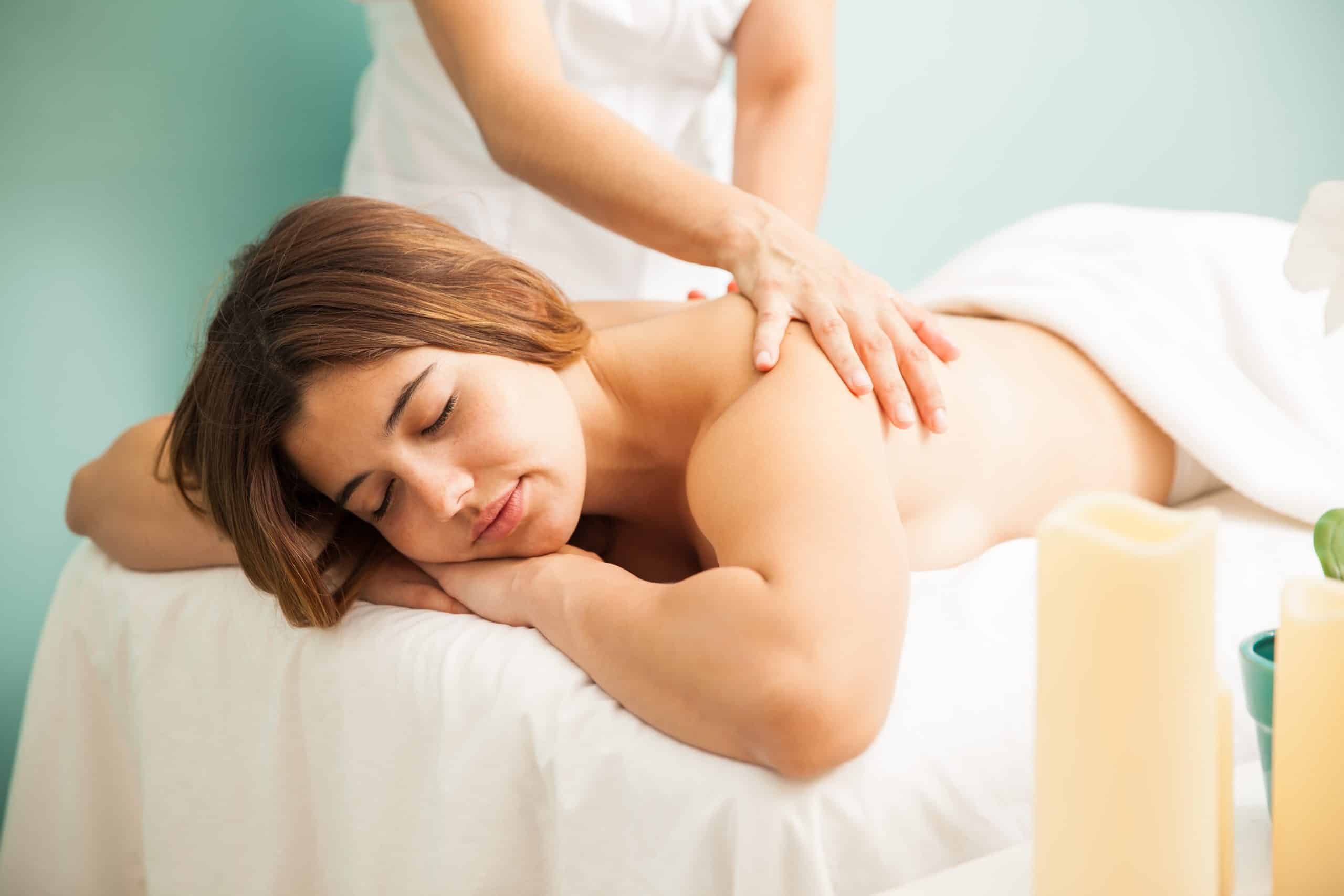
Therapeutic massage is outcome-driven. Our therapists evaluate what is happening in your body before applying any technique. They identify which muscles are restricted, which are compensating for something else, and which techniques are most likely to address the root cause rather than just the symptom. That assessment changes everything about the session.
We train our therapists across a wide range of techniques because not every body needs the same thing. The blend changes from session to session based on your condition, your history, and your goals.
Massage Services We Offer
Our massage services cover a full range of conditions and goals.
For pain relief and chronic tension, our therapists use deep tissue work, trigger point therapy, and therapeutic massage to address the specific muscles driving your pain. For sports and athletic recovery, sports massage combined with targeted modalities helps reduce soreness, restore range of motion, and lower injury risk between training sessions.
Prenatal massage is available for clients in any trimester, with modified positioning and technique designed specifically for the hip pain, lower back discomfort, and shoulder tension that develop during pregnancy. Postnatal massage is available as well.
For relaxation and stress, Swedish technique uses slower, lighter strokes to encourage the parasympathetic response, the physical state opposite to stress. Lomi Lomi massage uses long, flowing strokes across the body for deep relaxation without abrupt technique changes. Hot stone massage applies heated stones to relax the tissue before and during deeper work.
Couples massage and four-hands massage are also available for clients who want to share a session or want the intensity of two therapists working simultaneously.
Specialty Modalities That Go Beyond Standard Massage
Some conditions need more than hands-on pressure alone. We offer three specialty modalities that go deeper into the tissue and address problems that standard massage cannot always fully resolve.
Cupping therapy uses suction applied to the skin to pull tissue upward, increasing blood flow, reducing inflammation, and releasing adhesions in deeper muscle layers. It is particularly effective for chronic pain, dense muscle tissue, and athletic overuse.
Gua Sha, also called IASTM (Instrument-Assisted Soft Tissue Mobilization), uses stainless steel tools to apply controlled friction along the muscle and fascia. It breaks up scar tissue, releases chronic tightness, and restores movement in areas that have been restricted for a long time.
Warm Bamboo massage uses heated bamboo tools to apply firm, targeted pressure. The warmth allows deeper work without as much discomfort. It can be adjusted from light and soothing to deeply therapeutic depending on what the tissue needs.
Each modality is available as a $25 add-on to any massage session. Members receive one complimentary modality at every visit.
Float Therapy in American Fork
Float therapy is one of the most effective tools we have for stress reduction, pain relief, and deep recovery, and it is significantly underused because most people assume they will feel claustrophobic.
We use open float pools, not enclosed pods. There is no lid, no enclosure. You float in a shallow open pool of warm, Epsom-salt-saturated water in a private room. Researcher Dr. Justin Feinstein, whose work focuses on float therapy and anxious populations, has noted that open-air pool design removes the claustrophobia concern entirely.
The high concentration of Epsom salt makes you naturally buoyant. With gravity and sensory input removed, the nervous system has nothing to respond to. Cortisol drops. The brain shifts into deep rest. Most clients report a sustained sense of calm that lasts well beyond the session itself.
Float sessions are available in 60, 90, and 120-minute durations. For first-time floaters, 60 minutes is a good starting point.
Treatment Upgrades
Every session can include an upgrade. Standard upgrades at $10 each include a Premium Towel Treatment, Relaxing Magnesium, and Aromatherapy. Premium upgrades at $15 each include our proprietary REVIVE essential oil blends and an Herb Infused Oil Treatment.
The magnesium upgrade is particularly effective for stress-focused sessions. Magnesium supports nervous system regulation and muscle relaxation at a cellular level. Our REVIVE blends are formulated for specific therapeutic outcomes, not generic scent. They are exclusive to our clinic and not available elsewhere.
Members receive one free $10 or $15 upgrade at every session, included with the membership automatically.
Learn more about our full upgrade menu.
Pricing and Membership
Standard massage pricing runs $120 for a 50-minute session, $180 for 80 minutes, and $240 for 110 minutes. Standard float sessions are $80 for 60 minutes, $120 for 90 minutes, and $160 for 120 minutes.
First-time clients receive 35% off, bringing a 50-minute massage to approximately $78.
Our membership costs $10 per month with no contract and no cancellation fee. Members pay $72 for a 50-minute massage and $40 for a 60-minute float. Every session includes a complimentary specialty modality and one free upgrade. Members also receive 30% off for friends and family and 10% off retail.
Franchise chains like Massage Envy typically charge $60 to $80 per month for a single session at a fixed rate with no modality depth. Our membership covers every service at a discount, with access to cupping, Gua Sha, and float therapy that most membership-based chains do not offer.
Serving American Fork and All of Utah County
We are located at 366 S 500 E St Suite B, American Fork, UT, and we see clients from throughout Utah County, including Lehi, Orem, Provo, Pleasant Grove, Alpine, Highland, Lindon, and Saratoga Springs. Our hours are Monday through Saturday, 9AM to 10PM.
Related Topics:
- Prenatal Massage in American Fork: What to Expect
- Choosing the Right Massage Therapist in American Fork
Most of the tension your therapist works against during a session did not arrive that morning. It built over days, weeks, or longer. That is part of what makes reputable massage therapy effective at addressing deep-seated tension that accumulates over time. And when you arrive still carrying the stress of the day, it takes time, sometimes a significant portion of your session, to get the nervous system settled enough for the work to reach full depth.
What you do in the hour or two before your appointment changes how your body responds on the table. These five techniques are straightforward, take little time, and make a real difference in what your therapist can accomplish.
1. Take a Warm Shower or Bath
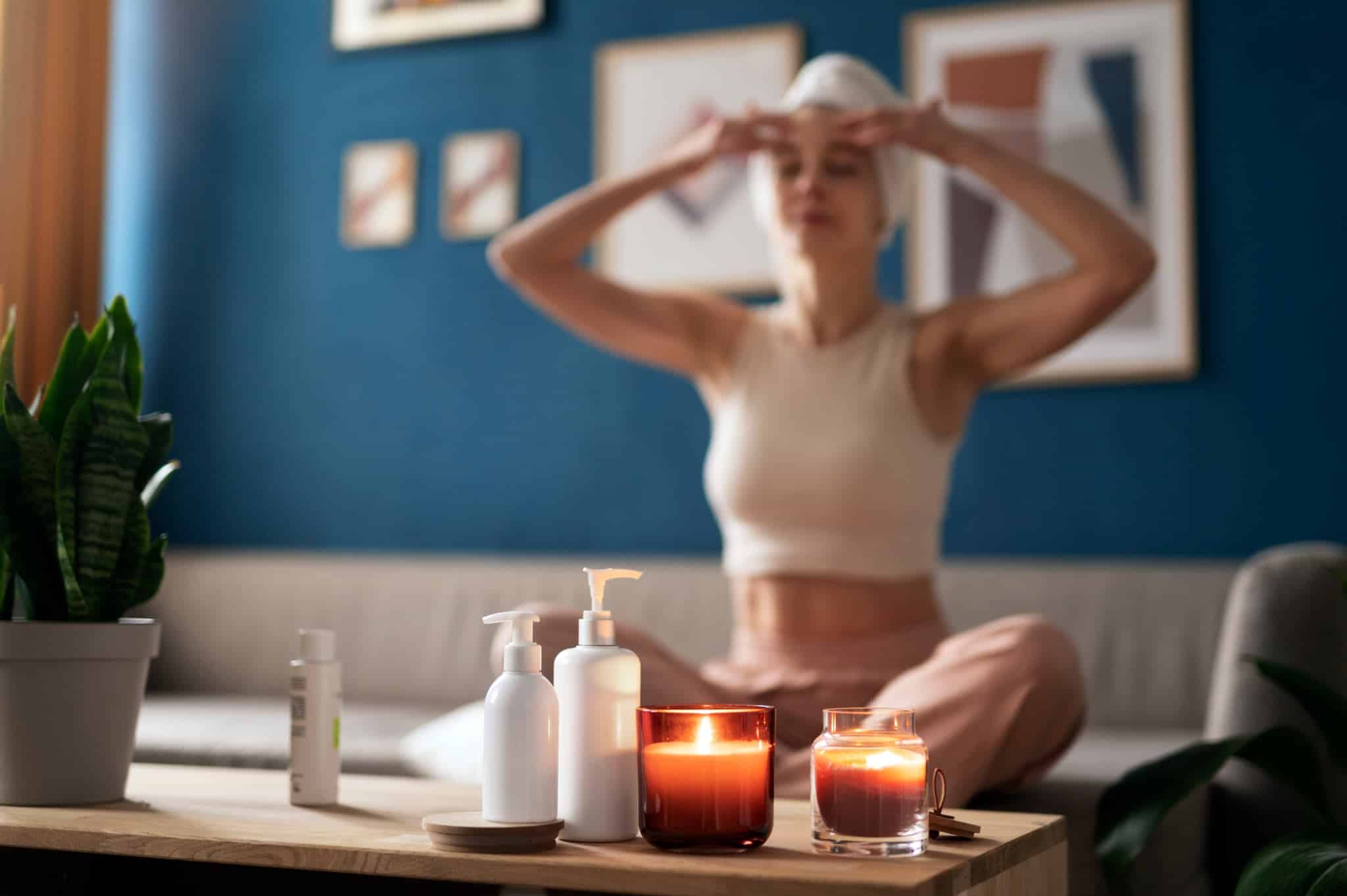
Heat relaxes muscle tissue before any hands-on work begins. A warm shower 30 to 60 minutes before your session increases blood flow to the surface, softens the fascia, and reduces the initial resistance your therapist encounters when they begin working deeper layers.
If you are coming in for deep tissue massage or a session that includes cupping or Gua Sha, pre-session heat makes the work more comfortable and more effective. The tissue responds faster when it is already warm.
2. Arrive Early and Sit Quietly
We ask all clients to arrive 15 minutes before their session. This is not just for paperwork. It is to give your nervous system time to shift out of whatever state you arrived in.
Driving to an appointment, navigating parking, rushing through a waiting room, all of that activates the stress response. If you go directly from that state to the table, the first several minutes of your session are spent unwinding what just happened in the parking lot rather than addressing what has been building all week.
Arriving early, sitting quietly, and letting the environment do its job gives your body a head start. You get more out of the time your therapist spends on the actual work.
3. Do a Few Minutes of Slow, Deep Breathing
Controlled breathing is one of the most direct ways to activate the parasympathetic nervous system, the state that supports relaxation and recovery. It does not require a practice or a routine. A few minutes of slow, deliberate breath before your session is enough to shift the baseline.
A simple approach: inhale for four counts, hold for four, exhale for six. Repeat for three to five minutes. The extended exhale is the part that signals the nervous system to downshift.
This pairs well with float therapy as well. Clients who come in already breathing slowly tend to reach the deep rest state faster during a float session, especially first-timers who need to settle before the environment can do its work.
4. Hydrate Before and After
Muscle tissue that is well-hydrated responds better to massage pressure and recovers faster after a session. Dehydrated tissue is denser and less pliable, which means more resistance for your therapist and more discomfort for you during deeper techniques.
Drink water in the hours leading up to your session. Avoid alcohol before massage, which dehydrates the tissue and blunts the nervous system response. After your session, continue drinking water through the rest of the day. This supports the tissue recovery process and helps clear any metabolic waste that the massage released into circulation.
5. Think Through What You Want to Address
This one takes two minutes and is consistently underused. Before your session, think specifically about what you want to address. Not vaguely ("my back is tight") but specifically: where the pain is located, when it tends to be worse, what makes it better or worse, and whether it has changed since your last visit.
Our therapists ask questions at the start of every session. The more specific your answers, the better the therapist can target the session toward what will actually help. A client who says "my lower back has been worse since I started working from a new desk two weeks ago" gives the therapist far more to work with than "my back hurts."
If you have a specific injury, have had recent surgery, or are pregnant, let us know when you book so we can prepare accordingly. Prenatal clients, for example, should mention their trimester so the therapist can set up positioning in advance.
Related Topics:
- The Ultimate Guide to Massage Therapy in American Fork, Utah
- Prenatal Massage in American Fork: What to Expect
The two most common massage types people ask about are deep tissue and Swedish. For anyone seeking a premium massage experience in American Fork, knowing the real difference between the two is a good place to start. They are frequently framed as opposites, one intense and therapeutic, the other light and relaxing. That framing is too simple, and choosing based on it often leads people to book the wrong session.
Understanding what each technique actually does, and when each one is the right call, helps you get real results from your time on the table.
What Deep Tissue Massage Actually Does
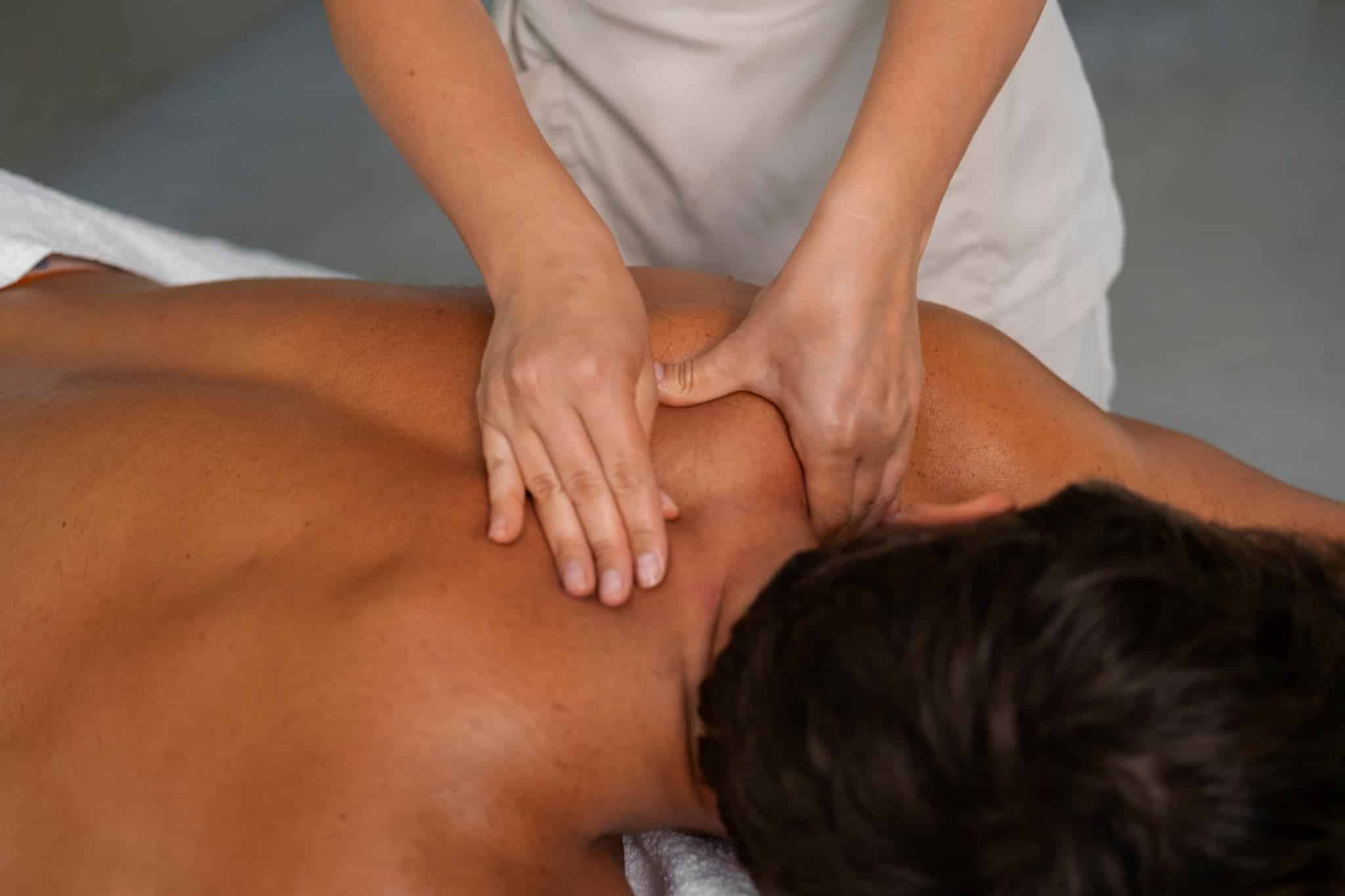
Deep tissue massage targets the deeper layers of muscle and connective tissue. The therapist uses slower strokes, sustained pressure, and focused techniques to work through the surface layers and reach the dense, restricted tissue underneath.
It is particularly effective for chronic pain, muscle knots, post-injury restriction, and areas where tension has been building for months rather than days. The goal is not to apply as much pressure as possible. The goal is to reach the specific tissue that is causing the problem and release it.
Deep tissue massage is not inherently painful. When performed by a trained therapist on adequately warmed tissue, it is firm and focused but not something you endure. If it crosses into sharp pain, the therapist should be told immediately so they can adjust.
What Swedish Massage Actually Does
Swedish massage uses longer, flowing strokes, kneading, and lighter pressure to encourage circulation and activate the parasympathetic nervous system. The purpose is to shift the body out of the stress response and into genuine rest.
It works on the surface layers of muscle rather than the deeper connective tissue. For stress relief, sleep support, and general tension that has not yet become a chronic problem, Swedish is often the better choice precisely because it does not push the body hard. The nervous system relaxes faster when the technique is not demanding a stress response of its own.
Relaxation massage at our clinic follows Swedish principles and is frequently paired with magnesium or essential oil upgrades that amplify the nervous system effect.
When Deep Tissue Is the Right Choice
Deep tissue is the better fit when:
You are dealing with chronic pain in a specific area, back, neck, hips, or shoulders, that has not responded well to lighter work. The tissue is dense, knotted, or restricted in a way that lighter strokes cannot reach. You are recovering from an injury or dealing with post-accident soft tissue damage. You are an athlete managing soreness, restricted mobility, or overuse in a specific muscle group.
For many chronic pain clients, deep tissue combined with a specialty modality like Gua Sha or cupping is more effective than deep tissue alone. Gua Sha uses stainless steel tools to release fascial restriction that even deep pressure cannot always fully address. Cupping uses suction to lift tissue and increase blood flow to layers that compression-based techniques cannot reach. Both are available as add-ons at our clinic for $25, or included at no cost for members.
When Swedish Is the Right Choice
Swedish is the better fit when:
Your primary issue is stress, anxiety, or nervous system overload rather than structural pain. You are new to massage and want to understand how your body responds before committing to deeper work. You are in generally good physical condition but need to reset mentally and physically. You are sensitive to pressure and find deep work uncomfortable rather than productive.
Swedish massage also works well before or after float therapy. Booking a relaxation massage followed by a float session in the same visit produces a sustained calm that most clients describe as unlike anything they experience from either service alone.
You Do Not Have to Choose Before You Book
One of the things we do differently at our clinic is that you do not need to arrive knowing which technique you want. Choose a session length. Our therapists will ask about your goals, pain points, and history at the start of the session and determine the right blend.
Most sessions at Body Balance do not rely on a single technique. Therapists are trained across Swedish, deep tissue, trigger point, sports, Lomi Lomi, and more, and they combine them within a session based on what the tissue needs. A client with chronic lower back pain might receive Swedish work in the opening of the session, deeper pressure in the lumbar and glute region, trigger point therapy on specific knots, and a lighter finish to encourage circulation.
The distinction between "deep tissue" and "Swedish" describes individual techniques within a therapist's toolkit, not exclusive session types.
Related Topics:
- Top 5 Relaxation Techniques Before Your Massage
- The Ultimate Guide to Massage Therapy in American Fork, Utah
Stress does not only live in the mind. It accumulates in the body, tightening the shoulders, shortening the breath, raising the resting tension in the muscles of the back and neck. If you have tried standard massage for stress and found the results were temporary, professional massage therapy in American Fork offers approaches that go further. Hot stone massage addresses something that lighter techniques often miss: the tissue itself will not let go until it is warm enough.
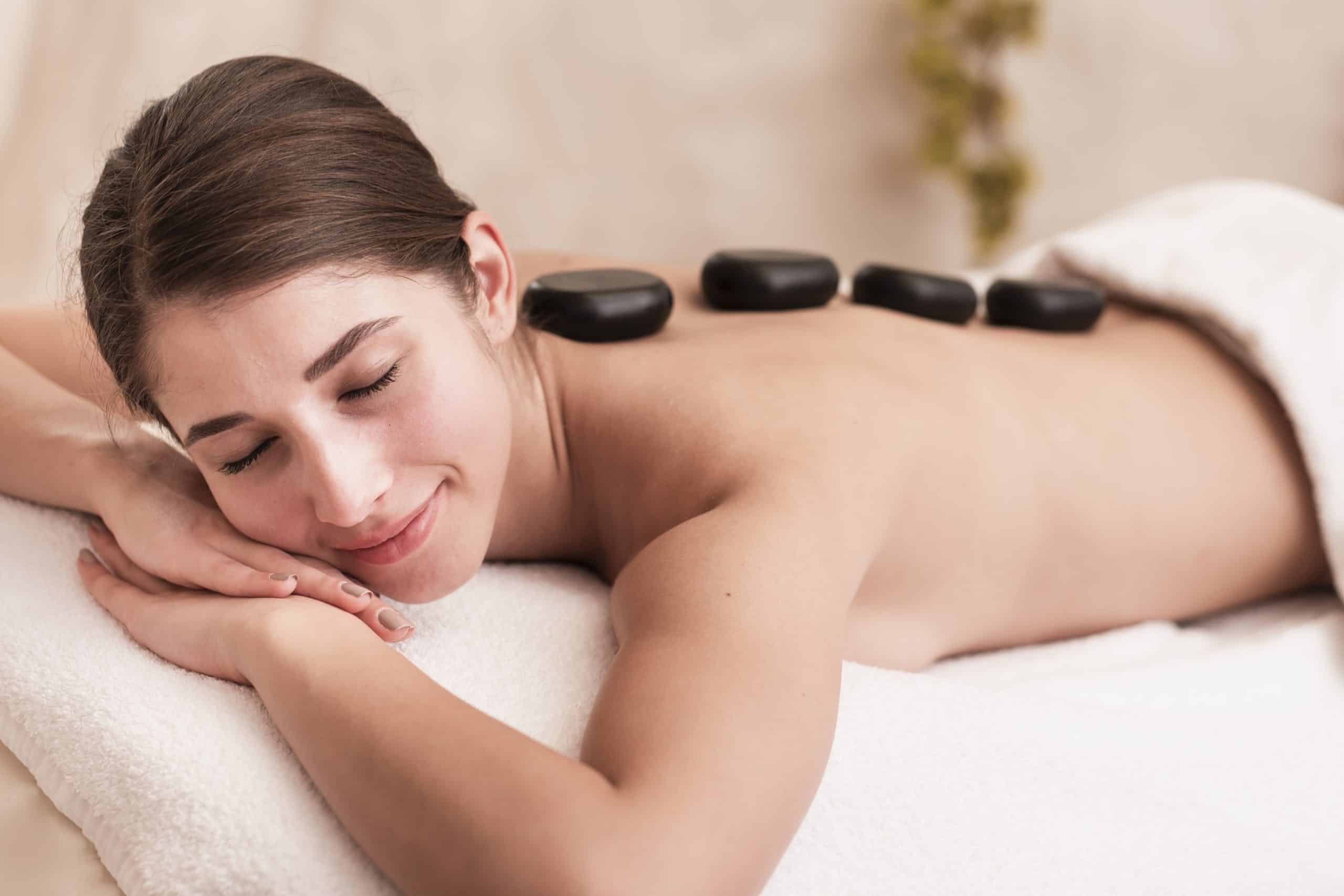
Hot stone massage uses heated basalt stones to apply both passive warmth and direct pressure to the muscles. The combination reaches places that hands alone, working on cold or lightly warmed tissue, cannot access as effectively.
How Hot Stone Massage Works
The therapist places smooth, heated stones on specific areas of the body, typically the back, shoulders, legs, and sometimes the hands or feet. The heat penetrates the tissue before any pressure is applied, increasing circulation, softening the fascia, and lowering the nervous system's defensive response to touch.
Once the tissue has warmed, the therapist uses the stones directly as massage tools, applying strokes and pressure with the heated surface. The effect is a session that reaches deeper layers of the muscle with less initial resistance, which translates to more effective work and less discomfort during the session.
For stress-focused sessions, this matters because chronically tense tissue often holds the body in a guarded state. The heat interrupts that pattern in a way that cold-surface pressure alone cannot replicate.
Stress Relief: What Hot Stone Massage Does to the Nervous System
The parasympathetic nervous system, the state opposite to the stress response, is activated by warmth, slow movement, and safety signals from the body. Hot stone massage delivers all three at once.
Sustained heat on the back of the neck, the upper trapezius, or the lumbar region signals the nervous system to release its grip. Heart rate slows. Breathing deepens. Cortisol, the primary stress hormone, begins to drop. By the time the therapist is applying direct pressure with the stones, most clients are already in a substantially different physiological state than when they walked in.
For clients dealing with high-stress work, poor sleep, or persistent anxiety, the physiological shift produced by a well-executed hot stone session tends to last longer than a standard relaxation massage. The tissue stays looser for longer because it was changed at a deeper level.
Combining Hot Stone with Other Services
Hot stone massage is most effective as part of a broader treatment approach for clients with significant stress or chronic tension.
Pairing a hot stone session with our float therapy on the same day or the following day extends the nervous system recovery well beyond what either service produces on its own. The massage addresses the physical tension in the tissue. The float provides the sustained sensory rest that allows the body to fully process and recover. Many clients report that this combination produces a sleep-quality shift that persists for several days after.
Adding a magnesium upgrade to a hot stone session amplifies the muscular relaxation. Magnesium supports nervous system regulation and muscle release at a cellular level. Our REVIVE essential oil upgrades are also well-suited to hot stone sessions, as the heat helps the oil penetrate more effectively.
Members receive one free $10 or $15 upgrade included at every visit, which makes adding magnesium or essential oils to a hot stone session standard rather than an upsell.
Who Hot Stone Massage Is Best For
Hot stone massage is a strong choice for clients who carry significant stress in the body and have found standard relaxation techniques insufficient. It is also a good option for clients who run physically cold and find that muscles tighten back up quickly after standard massage.
It is not the right choice during certain inflammatory conditions, pregnancy, or for clients who are sensitive to heat. Our therapists assess each client's situation before beginning. If hot stone is not the right fit for your presentation, we will recommend the technique that is.
Related Topics: