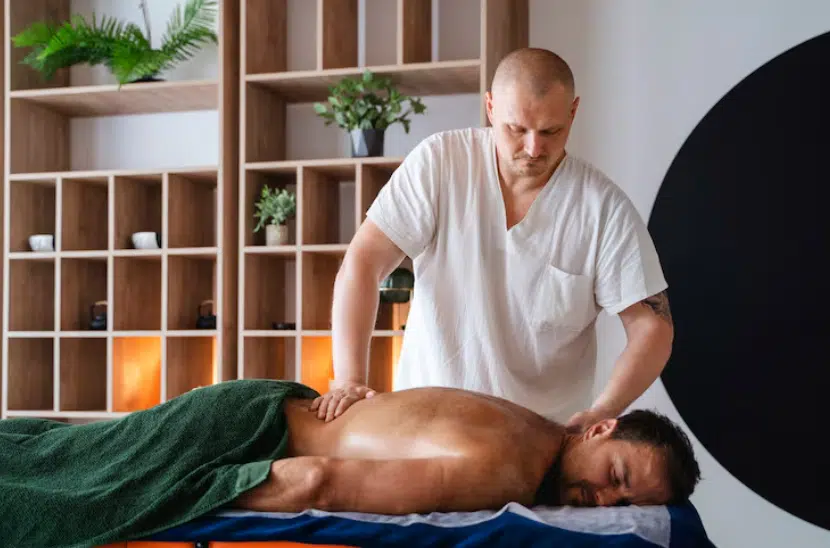
Managing chronic pain without relying solely on medication or invasive procedures is a realistic goal for many people. It requires a combination of approaches that address the tissue, the nervous system, and the underlying triggers of pain. Effective pain relief massage, like magnesium therapy, plays a key role in this combination when applied correctly.
Non-invasive pain management covers any approach that addresses pain without surgery, injections, or pharmaceutical intervention. It includes physical therapy, exercise, massage, acupuncture, chiropractic care, thermal therapies, and lifestyle changes.
No single modality resolves chronic pain on its own. The most effective non-invasive approaches are used in combination, each targeting a different mechanism of the pain cycle.
Chronic pain rarely has a single source. For most clients, it involves a combination of three overlapping problems.
Muscle hypertonicity (persistent contraction): Muscles that cannot fully release create sustained pressure on nerves, joints, and surrounding tissue. This perpetuates pain independent of the original cause.
Inflammation: Chronic low-level inflammation sensitizes pain receptors and keeps the nervous system in a heightened state. The pain threshold drops, and normal sensations register as pain.
Poor circulation to damaged tissue: Inadequate blood flow to chronically tight or injured areas slows repair and prolongs pain signals.
Magnesium addresses all three. Applied topically during massage, it supports muscle relaxation by facilitating the release phase of the contraction cycle. It inhibits inflammatory pathways through its role in regulating calcium channels and immune function. And the mechanical effects of massage itself improve circulation to tissue that has been chronically underperfused.
Magnesium massage works best as part of a layered protocol, not as a standalone treatment.
After acute inflammation resolves: Once any active flare has calmed, therapeutic massage with magnesium targets the mechanical contributors to pain: muscle hypertonicity, adhesions, and restricted movement.
Paired with float therapy: Open-pool float therapy extends the work done in a massage session. Body Balance's open float pools remove gravitational pressure from painful joints and muscles for 60 to 120 minutes, allowing the nervous system to reset after targeted tissue work.
Sustained through membership: Chronic pain is rarely resolved in one or two sessions. Regular visits supported by the $10/month membership sustain results over time. The tissue and nervous system need consistent input to reestablish normal function.
For clients managing chronic pain, Body Balance therapists routinely combine techniques within a single session.
Deep tissue with magnesium: Reaches deeper muscle layers where chronic tension lives, with magnesium enhancing the tissue release throughout the session.
Cupping therapy with magnesium: Cupping lifts tissue to increase blood flow and break up adhesions, with magnesium applied to the treated area to support the inflammatory response.
Gua sha (IASTM) with magnesium: Instrument-assisted soft tissue work breaks up scar tissue and fascial restriction, with magnesium supporting recovery in the treated area afterward.
Each of these is available as a standalone or combined session. Specialty modalities (cupping, gua sha, warm bamboo) are $25 as add-ons or included free with the membership.
Clients who benefit most include those with chronic back and neck pain that has not resolved with standard massage alone, fibromyalgia or widespread muscle pain, repetitive strain injuries, post-surgical tension, and anxiety-related muscle guarding that contributes to physical pain.
Body Balance Massage and Float serves clients with chronic pain across Utah County and the Wasatch Front. All therapists are licensed (LMT) in Utah and assess each client's condition at intake to build a session specifically around their pain pattern.
First-time clients receive 35% off their first massage. The $10/month membership (no contract) brings sessions to $72/hour with a free upgrade included per visit. Book a session online anytime.
Book online at bbmassageandfloat.com/booking or call (801) 855-5834. Open Monday through Saturday, 9 AM to 10 PM.
Q: Is magnesium massage a replacement for pain medication? A: No. Magnesium massage is one component of a non-invasive pain management approach. It is not a substitute for medical care. Clients managing chronic pain with medication should discuss complementary therapies with their physician.
Q: How many sessions do I need before seeing results for chronic pain? A: Most clients with chronic pain notice some reduction in tension after a single session. Meaningful, lasting results typically develop over three to six sessions spaced consistently over several weeks.
Q: Can I combine magnesium massage with cupping or gua sha? A: Yes. Combining them in the same session is common at Body Balance. The techniques work through different mechanisms and complement each other for pain relief and tissue repair.
Q: Is float therapy helpful for chronic pain? A: Yes. The zero-gravity environment of open float pools removes all pressure from painful joints and muscles for the duration of the session. Many chronic pain clients report significant relief that persists for several days following a float. Regular floating as part of a pain management routine produces compounding results.
Q: Is magnesium massage safe for older adults with chronic pain? A: Yes. The technique is gentle in delivery while being therapeutically effective. Topical magnesium is well-tolerated. Therapists at Body Balance adjust pressure and technique for each client's condition and comfort.
Related Topics: