Cupping therapy is a well-established technique for pain relief, muscle tension, and circulation. During pregnancy, the question is not simply whether it works, but whether it is safe for both mother and baby. Professional massage treatments ensure that all precautions are followed at each stage for maximum safety.
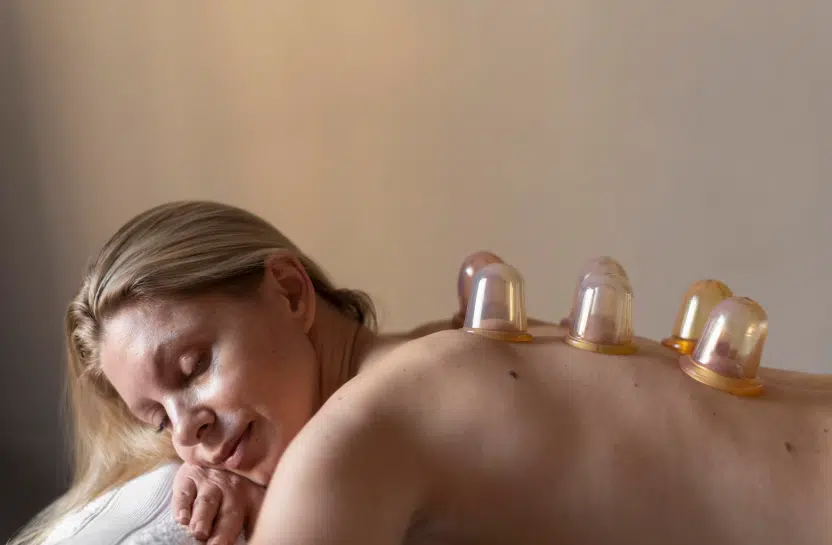
Cupping uses suction cups applied to the skin to lift soft tissue, increase blood flow to the treated area, and release fascial tension and deep muscle adhesion. The suction creates a pulling sensation rather than pressure, working through a mechanism opposite to standard massage compression.
During pregnancy, the most common reason to consider cupping is back pain. The postural changes of pregnancy shift the center of gravity forward and place an increasing load on the lumbar spine and the muscles supporting it. Hip tension, sciatic-type discomfort, and upper back strain are also common as pregnancy progresses.
Cupping can be safely performed during pregnancy by a trained therapist with the following guidelines.
First trimester: Cupping is generally avoided in the first trimester. The risk of miscarriage is highest in the first 12 weeks, and while cupping is unlikely to directly cause one, most licensed practitioners follow a conservative protocol and avoid strong physical stimulation during this window.
Second and third trimesters: Cupping is generally considered safe from the second trimester onward when performed by a therapist trained specifically in prenatal care. Specific areas and suction levels are modified for pregnancy.
Therapist training is not optional: Cupping during pregnancy should only be performed by a therapist with specific prenatal massage training. This determines which areas are treated, how much suction is applied, and how long cups are held.
Several areas are contraindicated during pregnancy.
Abdomen: Direct cupping over the abdomen is not performed during pregnancy under any circumstances.
Lower sacrum: Some practitioners avoid direct sacral cupping in later pregnancy. This area can stimulate uterine activity in certain traditional protocols.
Inner legs and specific points: Certain points traditionally associated with uterine stimulation are avoided by trained prenatal therapists.
Varicose veins: Cupping should not be applied directly over varicose veins, which become more common as pregnancy progresses.
At Body Balance, all prenatal clients complete a full intake assessment before any treatment. This includes cupping if it is requested as an add-on.
When performed correctly, cupping provides meaningful relief for several common pregnancy complaints.
Lower back and hip pain: The suction lifts fascia and muscle tissue in the lumbar and gluteal area, releasing the compression that builds as the uterus grows and alters posture.
Upper back tension: Many pregnant women carry significant tension in the upper back and neck as posture shifts forward. Upper back cupping is generally safe throughout pregnancy.
Sciatic discomfort: Cupping along the piriformis and gluteal muscles can reduce the tissue compression contributing to sciatic nerve irritation.
At Body Balance in American Fork, prenatal massage is performed by therapists trained in pregnancy-appropriate positioning and techniques. Cupping therapy during pregnancy is available as a $25 specialty add-on when it is requested and appropriate for the client's stage and condition.
Prenatal clients receive a full intake before their first session. If you are unsure whether cupping is right for your specific situation, the team can advise when you call or arrive. Members receive specialty modalities, including cupping, at no additional cost per session. Book a prenatal session online anytime.
Cupping during pregnancy is not recommended in the following situations: high-risk pregnancy or history of preterm labor; placenta previa or pregnancy complications requiring reduced physical stimulation; active skin infections, open wounds, or pregnancy-related skin conditions in the area to be treated; and the first trimester.
If any of these apply, speak with your OB or midwife before booking any massage or cupping treatment. Staff at Body Balance can also discuss suitability before you commit to booking.
First-time clients receive 35% off their first session. Book online at bbmassageandfloat.com/booking or call (801) 855-5834.
Q: Can you get cupping while pregnant? A: Yes, with appropriate precautions. Cupping is generally avoided in the first trimester and should be performed by a therapist trained specifically in prenatal care. The abdomen and certain pressure points are avoided. For most healthy pregnancies from the second trimester onward, cupping on the back and hips is safe and beneficial.
Q: Does cupping help with back pain during pregnancy? A: Yes. The postural demands of pregnancy place a significant load on the lumbar spine and surrounding muscles. Cupping lifts the fascial tissue in these areas, improving circulation and releasing deep tension that massage alone may not fully address.
Q: Is there any risk of cupping causing premature labor? A: Cupping on standard muscle areas does not stimulate labor. Therapists trained in prenatal care avoid specific points traditionally associated with uterine stimulation. This is why prenatal-specific training matters for any bodywork during pregnancy.
Q: Can I get a prenatal massage and cupping in the same session at Body Balance? A: Yes. Cupping can be added as a $25 specialty modality to any prenatal massage session or included free with the $10/month membership. Your therapist confirms which areas are appropriate for your stage of pregnancy before the session begins.
Q: At what point in pregnancy is massage most beneficial? A: The second and third trimesters are when most pregnant women experience the back pain, hip tension, and fatigue that massage and cupping address directly. Many clients find regular sessions during this period make a measurable difference in daily comfort and sleep quality.
Related Topics: