Sports massage is not the same as rest. And for most injury recovery situations, rest alone is not enough. When soft tissue is injured, whether that is a muscle strain, a pulled tendon, or repetitive stress damage, the body begins laying down scar tissue as part of the repair process. That scar tissue is less organized and less flexible than the original tissue. Without targeted intervention, it can restrict movement, create new pain points, and increase the risk of re-injury. Top sports massage therapy targets these issues to restore mobility and speed recovery.
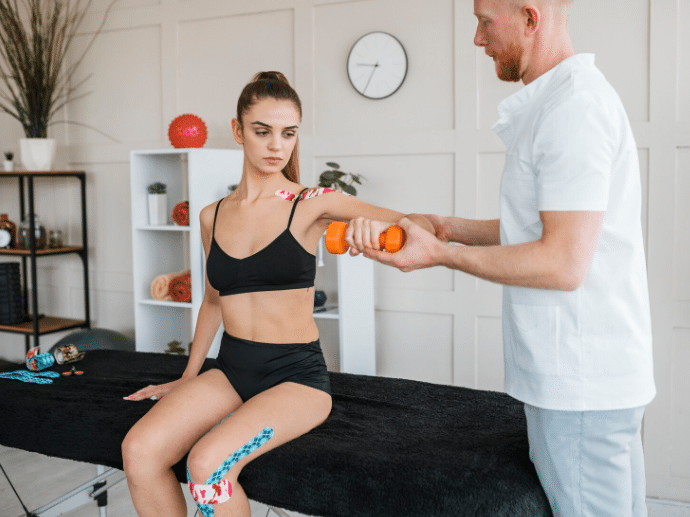
Sports massage uses a combination of compression, targeted pressure, cross-fiber friction, and stretching techniques applied to the specific muscle groups involved in the injury. These techniques increase blood flow to the damaged area, break up disorganized scar tissue as it forms, and help restore normal fiber alignment in the muscle.
The result is tissue that heals with better structural integrity, moves more freely, and is less likely to develop into a chronic problem. This is the practical difference between athletic recovery supported by sports massage and recovery that relies on rest and time alone.
Rest prevents further damage during the acute phase. It does not actively improve tissue quality. Passive rest does not increase circulation to the damaged area, break up adhesions, or restore range of motion.
Sports massage works actively on the tissue. It is not a replacement for the rest of your body's needs in the first 48 to 72 hours after injury, but it is a meaningful addition once the acute inflammatory phase has passed. Athletes who incorporate sports massage into recovery consistently return to training faster and with fewer lingering compensation patterns than those who rely on rest alone.
Muscle strains (grades one and two): Targeted pressure and cross-fiber friction reduce adhesion formation and restore muscle fiber alignment.
Tendinitis and tendinopathy: Repeated stress injuries to tendons respond well to sports and athletic massage combined with gua sha (IASTM), which applies targeted instrument-based pressure to break up degenerated tissue.
Overuse injuries: IT band syndrome, shin splints, and rotator cuff issues all involve repetitive strain patterns that sports massage can address directly in the affected musculature.
Post-competition soreness: Sports massage after events reduces delayed onset muscle soreness and accelerates the recovery window between competition days.
Cupping therapy is a strong complement to sports massage for injury recovery. Suction cups applied to the affected area lift soft tissue rather than compressing it, pulling blood flow into deeper layers, and releasing fascial adhesion in a way that pressure alone cannot replicate.
For athletes dealing with stubborn overuse injuries or chronic tightness in a specific area, combining sports massage with cupping in the same session addresses both the muscular component and the deeper fascial restriction. At Body Balance, cupping is available as a $25 add-on to any sports massage session or included at no additional cost with the $10/month membership.
Body Balance Massage and Float serves athletes and active adults across Utah County from American Fork, Lehi, Orem, Provo, Pleasant Grove, and the broader Wasatch Front. All massage therapists are licensed (LMT) in the state of Utah and trained in sports-specific techniques.
Sessions begin with an assessment of the injury, the muscles involved, and the stage of recovery. Technique selection is based on what the tissue actually needs, not a standardized protocol. First-time clients receive 35% off their first session. Book a sports massage session online or review pricing and membership options.
Book online at bbmassageandfloat.com/booking or call (801) 855-5834. Open Monday through Saturday, 9 AM to 10 PM.
Q: When can I start sports massage after an injury? A: Light sports massage on areas surrounding the injury can begin within a few days of acute injury. Direct work on the injured tissue typically becomes appropriate after 72 hours, once initial swelling subsides. Deeper techniques are introduced as the tissue moves through the subacute and remodeling phases.
Q: Is sports massage different from deep tissue massage? A: They share techniques but serve different purposes. Deep tissue massage addresses chronic tension in deeper muscle layers. Sports massage is calibrated to the specific demands of athletic activity, targets movement patterns, and focuses on the muscles most involved in the sport or injury.
Q: Can I get sports massage as a preventive measure, not just for injury? A: Yes. Many athletes schedule regular sports massages between training cycles to maintain tissue quality, prevent adhesion buildup, and reduce injury risk. For athletes in heavy training, monthly sessions are a reasonable minimum.
Q: Does sports massage hurt? A: Some techniques involve firm pressure that produces a sensation of productive discomfort in tight or damaged tissue. Your therapist at Body Balance will check in throughout the session and adjust pressure to your tolerance. Post-session soreness, similar to the feeling after a hard workout, is normal for 24 to 48 hours.
Q: What is the difference between sports massage and physical therapy? A: Physical therapy focuses on rehabilitation, functional movement, and medical recovery protocols. Sports massage focuses on soft tissue quality, circulation, and muscular recovery. The two are complementary, and many athletes work with both.
Related Topics: